
By Michael R. Jeng, MD, Principal Investigator, Advancing Rare Disorders: Vascular mAlformation Research Network with CaNVAS (ARDVARC)
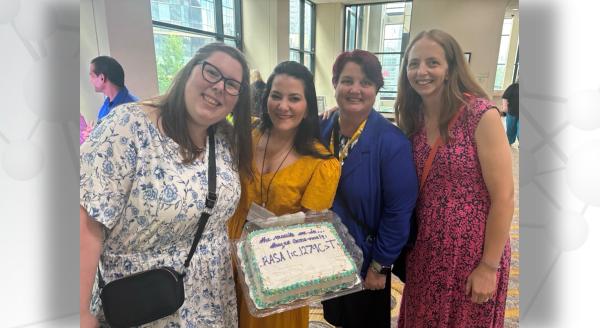
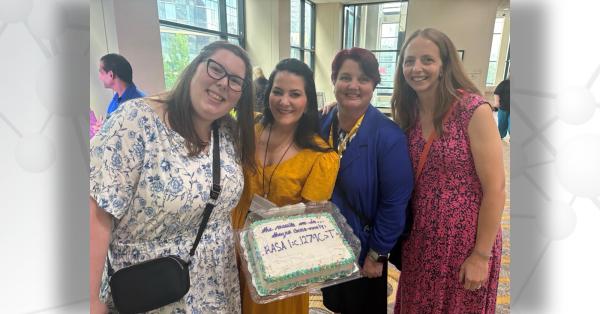
This summer, I was invited to participate in a panel discussion about research initiatives focused on vascular anomalies for the 40th annual Klippel-Trenaunay (K-T) Support Group meeting, held in Rochester, Minnesota at the Mayo Clinic from 7/10-7/12/2026.
The K-T Support Group was founded in 1986, 40 years ago, by Judy Vessey, a mother whose daughter had K-T and she wanted to help connect people affected by K-T, and to learn from each other’s’ experiences. Very little was understood about K-T, and the medical profession had little to guide the care of these patients.
The K-T Support Group and other patient-focused associations are particularly important for rare diseases. There may be no medical home (dedicated subspecialty) for clinical care, no subspecialty dedicated to research, and therefore no advancement in medical care or understanding of how the rare conditions occurs. The slow development of treatments for patients with vascular anomalies has lagged behind the development of medical knowledge and understanding of other disorders. This scenario can apply to any rare disease, including those of the Rare Diseases Clinical Research Network (RDCRN).
The development of new biologic inhibitors for cancer, coupled with the discovery that vascular anomalies harbor genetic mutations that these new drugs target, has allowed us to purposefully study these medications in our vascular anomaly patients, and subsequently improve their care and lives. This has really made vascular anomalies an area of interest to the medical community.
In addition to the education from talks given by an array of expert speakers from different subspecialties, I also learned from the patients, their parents, and their families. Journalist Carla Sosenko, the author of the book “I’ll Look So Hot in a Coffin," eloquently addressed the conference audience speaking about life as a child, adolescent, young adult, and adult who carries the diagnosis of K-T and the impact it had on her relationships. I have come to appreciate that vascular anomalies are only a part someone, and does not define any person. I read her book, which was moving and full of humor, and I found her discussion about the lack of her input in decisions made about treatments particularly enlightening. This affected her greatly, as well as her relationship with her parents, especially her mother. Despite feeling voiceless, in the end, Carla realized all the decisions were made from love, and she has subsequently developed a close and loving relationship with her parents.
After I get to know patients, their parents, and families, I may often mention trying to develop a positive perspective on their illness. I tell parents that this really can help them feel control at a time when they have lost control. One recent patient said to me, “So you want me to look for the silver lining in all of this.” (Yes!!) I ask them to consider the closeness that they will have with their children due to the child’s illness, which otherwise may not have occurred. This is illustrated so nicely in Ms. Sosenko’s book. I point out that the challenges faced by their family may lead to the development of resilience in each family member. Recognition of this can help with coping and allowing the best outcomes for anyone who has a chronic medical condition.
Finally, I often highlight the existence of a community of people whose shared experiences allow for a special connection, which only those impacted by the same or similar rare disease can understand. This resource is not something to take for granted. Especially considering the COVID pandemic, a sense of community has become recognized as essential for well-being.
For me, the K-T Support Group Annual Conference provided me with the opportunity to be part of a rare disease community, to feel the reward that only a career combining clinical care and medical research gives. I encourage anyone, especially our early career investigators, to take the opportunity to attend these gatherings. The rewards are great.
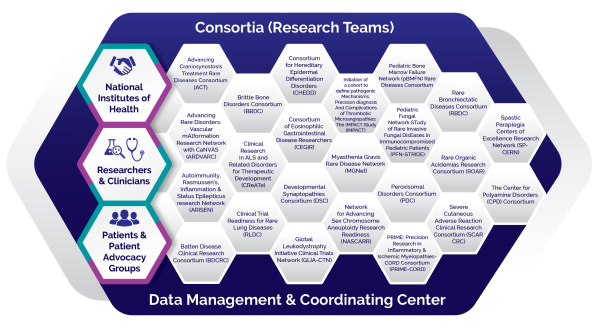
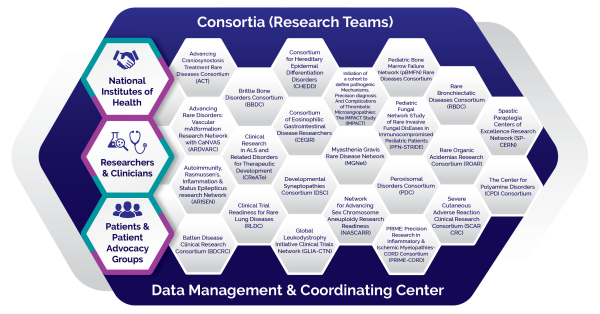
The Advancing Rare Disorders: Vascular mAlformation Research Network with CaNVAS (ARDVARC) is part of the Rare Diseases Clinical Research Network (RDCRN), which is funded by the National Institutes of Health (NIH) and led by the National Center for Advancing Translational Sciences (NCATS) through its Division of Rare Diseases Research Innovation (DRDRI). ARDVARC is funded under grant number U54HL185006 as a collaboration between NCATS and the National Heart, Lung, and Blood Institute (NHLBI).