The Rare Diseases Clinical Research Network (RDCRN) is welcoming eight new research groups to the network. Each group will bring together scientists, clinicians, patients, families, and patient advocates to study a wide range of rare diseases.
In 2025, the National Institutes of Health (NIH) awarded $31.6 million in grants to begin the fifth cycle of funding for the RDCRN, including a Data Management and Coordinating Center hosted at Cincinnati Children’s Hospital Medical Center.
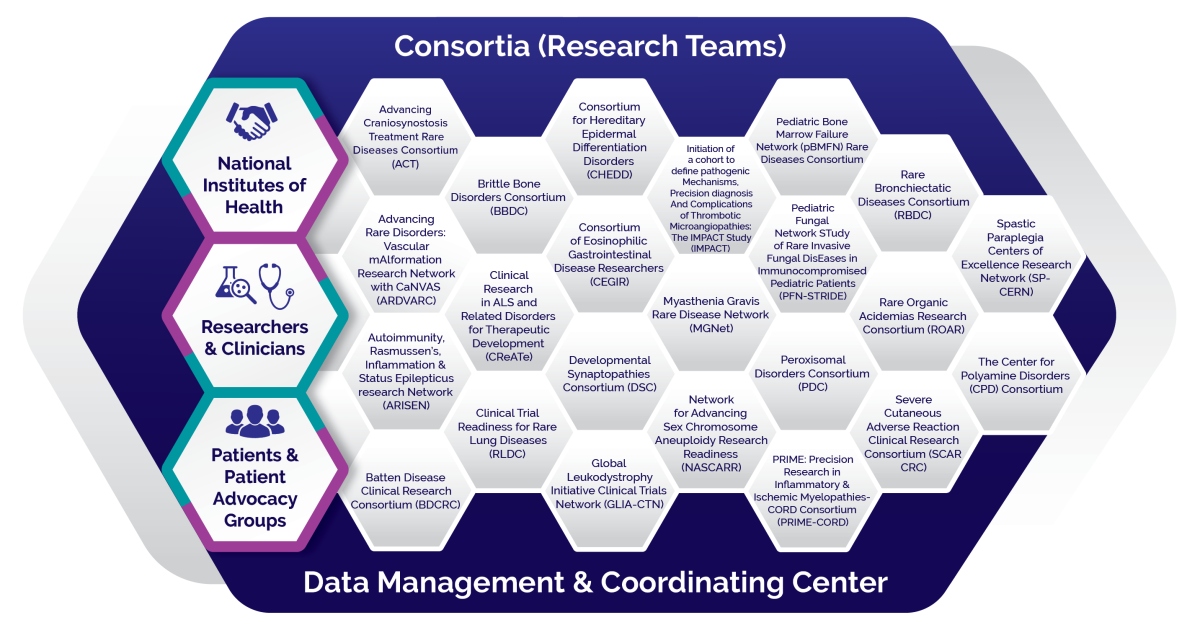
Now, the NIH has awarded additional funding to establish more research groups, expanding the network to 23 research consortia. Of the eight newly announced groups, seven are joining the network for the first time and one is continuing from the previous cycle.
The newly announced consortia include:
- Clinical Trial Readiness for Rare Lung Diseases (RLDC)
- Lead Institution: University of Cincinnati
- Consortium for Hereditary Epidermal Differentiation Disorders (CHEDD)
- Lead Institution: Northwestern University
- Consortium of Eosinophilic Gastrointestinal Disease Researchers (CEGIR)—continuing from previous cycle
- Lead Institution: Cincinnati Children’s Hospital Medical Center
- Pediatric Bone Marrow Failure Network Rare Diseases Consortium (pBMFN)
- Lead Institution: Boston Children's Hospital
- Peroxisomal Disorders Consortium (PDC)
- Lead Institution: Baylor College of Medicine
- PRIME: Precision Research in Inflammatory & Ischemic Myelopathies-CORD Consortium (PRIME-CORD)
- Lead Institution: Johns Hopkins School of Medicine
- Severe Cutaneous Adverse Reaction (SCAR) Clinical Research Consortium (CRC)
- Lead Institution: Vanderbilt University Medical Center
- The Center for Polyamine Disorders (CPD) Consortium
- Lead Institution: Michigan State University
These groups join a legacy of consortia that have conducted research on over 300 individual disorders through the RDCRN, which was established by Congress under the Rare Diseases Act in 2002. Their efforts have resulted in hundreds of clinical trials, thousands of publications, and the approval of 13 treatments for rare diseases by the FDA.
With the addition of these eight consortia, the RDCRN looks forward to new discoveries that will improve the lives of people living with rare diseases.
Learn more about the RDCRN and the 23 consortia.