Each month, we share summaries of recent Rare Diseases Clinical Research Network (RDCRN) grant-funded publications. Catch up on the latest RDCRN research below.
Jump to:
- Brittle Bone Disorders Consortium (BBDC)
- Developmental Synaptopathies Consortium (DSC)
- Global Leukodystrophy Initiative Clinical Trials Network (GLIA-CTN)
Listen to these summaries on the Rare Research Report podcast.
Brittle Bone Disorders Consortium (BBDC)
Exploring Child, Caregiver, and Clinician Perspectives on Mental Health in Children with Osteogenesis Imperfecta
Osteogenesis imperfecta (OI) is a group of inherited connective tissue disorders associated with a wide range of symptoms, including fragile bones that break easily. In addition to physical symptoms, OI can contribute to negative mental health outcomes. Previous research has focused on mental health among children with OI and their caregivers, as well as the perspectives of clinicians who care for individuals with OI. However, no studies have compared mental health-related themes among all three of these groups.
In this study, researchers explored child, caregiver, and clinician perspectives on mental health in children with OI. The team conducted semi-structured interviews with these groups and analyzed their answers to find common themes.
Results reveal themes of depressed and anxious moods, as well as risk factors and protective factors for these symptoms. Authors note that further work may be needed to tailor psychotherapy and pharmacotherapy for children with OI.
Qian JH, Wiese AD, Gonzalez C, Shepherd WS, Cho H, Colombo GM, Morales JM, Guo S, Kostick-Quenet KM, Nguyen D, Schneider SC, Ayers K; Members of the BBDC; Robinson ME, Murali CN, Lee B, Sutton VR, Storch EA. A qualitative exploration of child, caregiver, and clinician perspectives on mental health in children with osteogenesis imperfecta. J Child Health Care. 2026 Sep;30(3):481-496. doi: 10.1177/13674935251379181. Epub 2025 Sep 12. PMID: 40938730; PMCID: PMC13490651.
Developmental Synaptopathies Consortium (DSC)
Developing a Resource for Patient-Derived Induced Pluripotent Stem Cells in Neurodevelopmental Disorders
Neurodevelopmental disorders (NDDs) are a group of conditions that affect the growth and development of the brain, leading to a spectrum of impairments that can affect cognitive and motor functions, communication, and adaptive behavior. Patient-derived induced pluripotent stem cells (iPSCs) offer new opportunities for therapeutic development in NDDs. However, not many iPSC repositories exist for rare monogenic types of NDDs due to fewer numbers of patients.
In this study, researchers developed a resource for patient-derived iPSCs in rare forms of NDDs. The team used coordinated recruitment, deep clinical phenotyping, and standardized iPSC generation techniques to build a repository of iPSCs from individuals with rare and recently identified pathogenic variants in the genes TSC2, PTEN, FOXG1, KCNQ2, SHANK3, and SETBP1.
This new repository represents a unique platform for advancing clinical trials and knowledge in NDDs. Authors note that the structure of the study holds promising potential for researching additional genetic disorders.
Chen C, Afshar-Saber W, Iglesias I, Kim K, Lewis B, Srinivasan G, Chen C, Hirsh R, Guardado R, Polanco T, Swanson A, Norabuena E, Whye D, Jain A, Cai C, Sun L, Chopra M, Chen I, Iannello G, Rozumny B, Hanson E, Sahin M, Buttermore ED. Development of a human iPSC and patient phenotyping resource for preclinical investigations of neurodevelopmental disorders. Stem Cell Res. 2026 Sep;95:104073. doi: 10.1016/j.scr.2026.104073. Epub 2026 Aug 6. PMID: 42612424.
Global Leukodystrophy Initiative Clinical Trials Network (GLIA-CTN)
Describing Neuropathologic Features of Congenital Deafness and Adult-Onset Progressive Leukoencephalopathy
Congenital deafness and adult-onset progressive leukoencephalopathy (DEAPLE) is a neurodegenerative disorder caused by changes in the gene KARS. DEAPLE is a type of leukodystrophy, which is a group of disorders affecting the white matter of the brain due to the loss or absence of myelin, the protective coating around nerves. Few cases of DEAPLE have been documented in medical literature.
In this study, researchers describe the neuropathologic features of DEAPLE. The team collected and analyzed clinical information, genetic reports, neuroimaging, and postmortem brain pathology of a patient with DEAPLE.
Results confirm the previously reported features of DEAPLE, in addition to the possibility of a neuroinflammatory component associated with areas of active disease.
Nagy A, Marshall MS, Frosch MP, Li Y, Walker MA, Eichler FS. Neuropathologic Features of Adult-Onset Progressive Leukodystrophy Due to KARS Pathogenic Variants: A Case Report. Neurol Genet. 2026 Aug 18;12(5):e200419. doi: 10.1212/NXG.0000000000200419. PMID: 42621967; PMCID: PMC13487944.
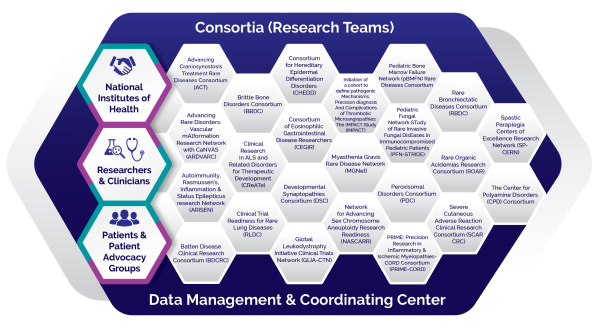
The Rare Diseases Clinical Research Network (RDCRN) is funded by the National Institutes of Health (NIH) and led by the National Center for Advancing Translational Sciences (NCATS) through its Division of Rare Diseases Research Innovation (DRDRI). Now in its fifth five-year funding cycle, RDCRN is a partnership with funding and programmatic support provided by Institutes, Centers, and Offices across NIH, including the National Institute of Neurological Disorders and Stroke, the National Institute of Allergy and Infectious Diseases, the National Institute of Diabetes and Digestive and Kidney Diseases, the Eunice Kennedy Shriver National Institute of Child Health and Human Development, the National Institute of Arthritis and Musculoskeletal and Skin Diseases, the National Heart, Lung, and Blood Institute, the National Institute of Dental and Craniofacial Research, the National Institute of Mental Health, the Office of Dietary Supplements, the National Institute on Aging, the National Human Genome Research Institute, the National Institute on Deafness and Other Communication Disorders, and the Office of Research on Women’s Health.