Each month, we share summaries of recent Rare Diseases Clinical Research Network (RDCRN) grant-funded publications. Catch up on the latest RDCRN research below.
Jump to:
- Brittle Bone Disorders Consortium (BBDC)
- Spastic Paraplegia Centers of Excellence Research Network (SP-CERN)
Listen to these summaries on the Rare Research Report podcast.
Brittle Bone Disorders Consortium (BBDC)
Assessing Temporomandibular Joints in Patients with Osteogenesis Imperfecta
Osteogenesis imperfecta (OI) is a group of inherited connective tissue disorders associated with a wide range of symptoms, including fragile bones that break easily. Individuals with OI can experience problems with bone formation and function.
In this study, researchers assessed temporomandibular joints—which connect the jawbone to the skull—in patients with OI. First, the team used cone-beam computed tomography (CBCT) to create 3D images of the temporomandibular joints of 48 OI patients and 48 age- and sex-matched controls. Next, they evaluated mandibular condylar volume and height.
Results showed that individuals with OI had significantly reduced condylar volume and height. Authors note that these findings indicate impaired and delayed condylar development consistent with overall skeletal maturation delay in OI.
Briner M, Retrouvey JM; Members of BBDC. Quantitative assessment of the temporomandibular joints in patients with osteogenesis imperfecta: a CBCT study. Oral Surg Oral Med Oral Pathol Oral Radiol. 2025 Sep 17:S2212-4403(25)01207-6. doi: 10.1016/j.oooo.2025.09.007. Epub ahead of print. PMID: 41177752; PMCID: PMC12629244.
Spastic Paraplegia Centers of Excellence Research Network (SP-CERN)
Evaluating Plasma Neurofilament Light Chain as a Biomarker for Hereditary Spastic Paraplegia-SPG11 and -ZFYVE26
Hereditary spastic paraplegia (HSP) is a large group of inherited disorders that affect nerves that send messages to the muscles. HSP-SPG11 and HSP-ZFYVE26 are autosomal-recessive forms of HSP, meaning that they are caused by two mutated copies of a gene. More information is needed about measurable signs of these disorders for new therapeutic trials.
In this study, researchers evaluated plasma neurofilament light chain (pNfL) as a biomarker for HSP-SPG11 and HSP-ZFYVE26. The team analyzed pNfL levels in 57 patients with HSP, collecting clinical and biomarker data over five years.
Results showed significantly elevated baseline pNfL levels in patients with HSP, reflecting early neuroaxonal injury. However, authors note that baseline pNfL did not help predict future disease progression.
Agianda HAP, Alecu JE, Tam A, Kim HM, Rong J, Battaglia N, Warren K, Mannix R, Setola N, Barghigiani M, Yoon G, Takiyama Y, Moon J, Bernardi K, Yang K, Schierbaum L, Santorelli FM, Ebrahimi-Fakhari D. Longitudinal Dynamics of Plasma Neurofilament Light Chain in Hereditary Spastic Paraplegia Type 11 (HSP-SPG11) and Type 15 (HSP-ZFYVE26). Mov Disord. 2025 Dec 9. doi: 10.1002/mds.70142. Epub ahead of print. PMID: 41365832.
Exploring the Spectrum of Movement Disorders in Early-Onset Hereditary Spastic Paraplegia
Hereditary spastic paraplegia (HSP) is a large group of inherited disorders that affect nerves that send messages to the muscles. Individuals with early-onset HSP can experience movement disorders, but not much is known about why and how often they occur.
In this study, researchers explored the spectrum of movement disorders in early-onset HSP. The team analyzed data from 428 children and young adults with HSP, reviewing clinical characteristics and video examinations.
Results showed that movement disorders—including dystonia, parkinsonism, and ataxia—were common in childhood-onset HSP. Authors note that routine screening and management tailored to specific genotypes of movement disorders—especially dystonia—may improve functional outcomes and quality of life.
Resch D, Alecu JE, Yang K, Quiroz V, Schierbaum L, Bernardi K, Zaman Z, Agianda HAP, Rong J, Battaglia N, Carty S, Tam A, Kieslich M, Santorelli FM, González-Salazar C, França Junior MC, Ebrahimi-Fakhari D. Spectrum of Movement Disorders in Early-Onset Hereditary Spastic Paraplegia: A Study of 428 Cases. Mov Disord. 2025 Dec 2. doi: 10.1002/mds.70141. Epub ahead of print. PMID: 41328529.
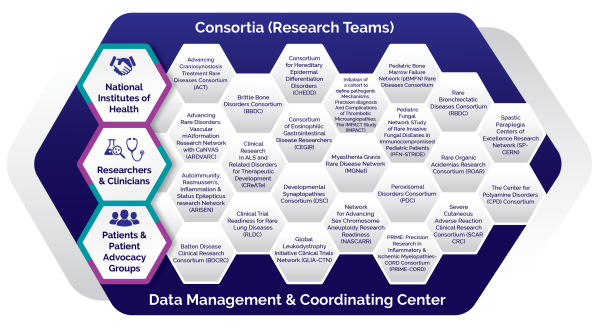
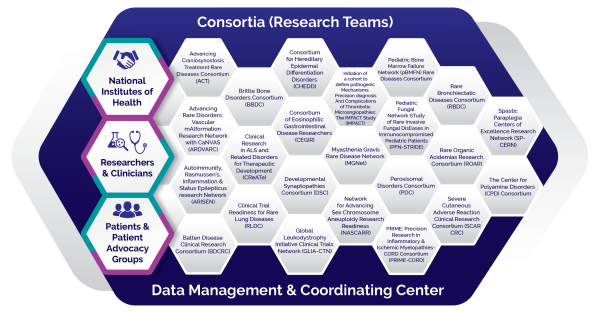
The Rare Diseases Clinical Research Network (RDCRN) is funded by the National Institutes of Health (NIH) and led by the National Center for Advancing Translational Sciences (NCATS) through its Division of Rare Diseases Research Innovation (DRDRI). Now in its fifth five-year funding cycle, RDCRN is a partnership with funding and programmatic support provided by Institutes, Centers, and Offices across NIH, including the National Institute of Neurological Disorders and Stroke, the National Institute of Allergy and Infectious Diseases, the National Institute of Diabetes and Digestive and Kidney Diseases, the Eunice Kennedy Shriver National Institute of Child Health and Human Development, the National Institute of Arthritis and Musculoskeletal and Skin Diseases, the National Heart, Lung, and Blood Institute, the National Institute of Dental and Craniofacial Research, the National Institute of Mental Health, the Office of Dietary Supplements, the National Institute on Aging, the National Human Genome Research Institute, the National Institute on Deafness and Other Communication Disorders, and the Office of Research on Women’s Health.